Thursday, 25 July 2013

Dante Resources for the Discerning Victorian Researcher


Preparing papers on Dante and George Eliot for the Glocal Victorians conference in Venice last month and for the upcoming Leeds Cross-Cultural BookFair made me reflect on helpful resources to access when parachuting into Dante studies from the land of Victorian literary and cultural studies. The Commedia texts (Inferno, Purgatorio, and Paradiso) are not short texts in themselves, and a wealth of wider discourses collect around them. However, they are wonderful texts to read for whatever reason. Dante’s journey is basically an extended multi-faceted gossip column of medieval Italy (with classical literature thrown in for extra seasoning), and then taken to metaphysical and philosophical levels; all sorts of tragic heroes and heroines, monsters and villains leap out at him (and you) from every turn.
It’s particularly helpful for a Victorianist to read Dante’s work because the Victorians loved the Commedia (in translation, generally). When H.F. Cary published his translation, in 1814, Samuel Taylor Coleridge popularized the text and it caught the public imagination. Allusions and references extend throughout the century, from the works of Christina and Dante Gabriel Rossetti, to the poetry of Tennyson, and to the Savoy operas of Gilbert and Sullivan. Of course, mid-century, it gained an extra resonance due to the Risorgimento (/very/ briefly -the collection of city states which we now know as Italy had been in the hands of the Austro-Hungarian Empire; people like Giuseppe Mazzini and Giuseppe Garibaldi fought to free these states and to unite them as a single Italian nation, which officially occurred in 1861). There was a large Italian refugee community in nineteenth-century London, and the English were in general sympathetic to the Italian cause (for example, a fashion item, the ‘Garibaldi Blouse’ was named after Giuseppe Garibaldi). Dante’s epic, the first in the Italian language, became a rallying symbol for the idea of Italian national identity: a common linguistic and literary heritage which might unite a common Italian ethnicity.1 Consequently, characters, phrases and scenes from the Commedia were a major part of Victorian cultural vocabulary.
There have been multiple translations of Dante’s work. I found it essential to read two alongside each other: H.F. Cary’s translation, for the Victorian context, and a modern translation with commentaries, to ensure my own understanding of the text.
Here are some resources which I’ve found helpful exploring Dante from a Victorian perspective (and the books also serve as a bibliography for this post). This list is by no means exhaustive!

Online:

Princeton Dante Project
This project helpfully brings together the text of the Commedia along with (searchable) notes, summaries, and commentary, including useful maps and diagrams. They’ve also got a great list of web links.

Dartmouth Dante Project:
A searchable text-and-commentary affair. Very comprehensive: they’ve got about seventy commentaries!

Dante Worlds
http://danteworlds.laits.utexas.edu/index.html
This is a wonderful visualization of Dante’s journey: they link beautiful illustrations with comprehensive diagrams and commentary.

The World of Dante:
Each canto is laid out in Italian-English translation, with helpful hyperlinks by topic, which open in separate windows. There’s also the opportunity to access music for Purgatorio and Paradiso.

Divine Comedy Online:
Here, you can see different translations and access different illustrations to go with them – if you enjoy illustration, as I do, then this facility provides a fascinating insight into shifting interpretations of Dante across 19th/20th centuries, moving from William Blake to Gustave Doré and to Salvador Dali

Leeds Dante Diaries:
I’ve had some really helpful Dante-related conversations with a couple of people here. Their blog provides some interesting musings on intersections with Dante and gives a general flavour of life in Dante Studies.

Dante Today: Contemporary Sightings and Citings of Dante:
This site provides lots of fun (a working holiday in Dante research) but also some intriguing cultural connections. ‘Contemporary’ takes in a wide span – post medieval world, pretty much. The blog covers a number of angles: food, consumer goods, literary studies, and the internet world. Nineteenth-century researchers may enjoy posts on Gladstone’s http://research.bowdoin.edu/dante-today/written-word/anne-isba-gladstone-and-dante-victorian-statesman-medieval-poet-2006/) and Melville’s enjoyment of the Commedia.

Books (just a few):
The Durling and Martinez editions of Inferno, Purgatorio and Paradiso:
No matter how many great Dante sites one finds, physical copies can sometimes be essential. These are accurate and evocative translations with lots of helpful notes and diagrams. I hated having to take them back to the library, so broke down and bought them myself.
Dante and the Victorians
Alison Millbank’s book is both comprehensive and insightful –a nuanced evocation of intersections between Dante and various aspects of Victorian culture
Dante in the Long Nineteenth Century- This recent work provides a global and interdisciplinary approach to Dante’s afterlife. You may be able to access a comprehensive preview through Oxford Scholarship Online.
Nick Havely has a number of useful books which give background on Dante’s life and afterlife: Dante in the Nineteenth Century, Dante’s Modern Afterlife from Blake to Heaney, and Dante.
A.N. Wilson: Dante in Love – A comprehensive and readable exploration of Dante through a philosophic love. Wilson provides a fantastic summary of numerous aspects around Dante specifically for people new to the subject and to his contemporary world (if you thought the Wars of the Roses was complicated, Guelph and Ghibelline Italy cubes those minor squabbles). Wilson then explores Dante’s afterlife; my only quibble is that his exploration of Dante’s Victorian afterlife doesn’t take in Christina Rossetti’s Monna Innomminata or any work by George Eliot, who loved Dante’s texts and peppered her own with references to them.

1 See Martin Clark, The Italian Risorgimento (Harlow:Longman, 2009), among others.

Friday, 12 April 2013

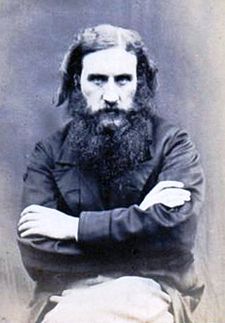
George MacDonald and Imaginative Engagement

The Victorian novelist George MacDonald, though well-known and well-regarded in the Victorian era (particularly by figures like John Ruskin and Lewis Carroll), is often forgotten today, as the editors of the recent Rethinking George MacDonald: Contexts and Contemporaries put it: ‘His ideas fell out of fashion, and the majority of MacDonald’s works were relegated to dusty library shelves’. (Glasgow: ASLS, 2013 Certainly, the combination of the fantastical and the spiritual in many of his works does not suit all tastes; similarly, not all readers will enjoy the moments in his realist novels which focus on moral development. (Though they are often enjoyable no matter what one’s taste for morality might be: Donal Grant, for example, contains drugging, hallucinations, a mad villainous Earl, and not just one but two skeletons in the attic.)

But no matter what one may think of George MacDonald’s answers, the questions he raises are always intriguing and direct his audience in search of nuanced insight, particularly on the way the imagination functions and the way in which we engage with it.  In his own time, he was at the centre of many Victorian debates.  His belief in the shared masculine and feminine nature of the Christian God chimed in with contemporary arguments made by the mid-Victorian feminist Langham Place Group as part of their fight for increased roles for women in public life.  He encouraged his friend Octavia Hill in her efforts to transform tenement housing. 
MacDonald also believed strongly in the social value of the poetic imagination, arguing for its role in investigating ‘the very nature of things’ in his 1867 essay ‘The Imagination: Its Effects and Culture’:

‘It is the far-seeing imagination which beholds what might be a form of things, and says to the intellect: "Try whether that may not be the form of these things;” which beholds or invents a harmonious relation of parts and operations, and sends the intellect to find out whether that be not the harmonious relation of them’.  (‘Imagination’, p. 12)

 MacDonald’s link between the imagination and intellectual inquiry and the innovative potential held in both suggests our modern discourse of public engagement in the humanities. This discourse often focuses on debate and dialogue, as in UCL’s Public Engagement Unit’s manifesto of ‘encourag[ing] a culture of two-way conversations between university staff and students, and people outside the university’ or the Wellcome Trust’s desire that public engagement lead people ‘to consider, question and debate the key issues in science and society’. MacDonald argues that education should not end in an acceptance of fact but in fervent debate:

‘The end of education [ . . .] is a noble unrest, an ever renewed awaking from the dead, a ceaseless questioning of the past for the interpretation of the future, an urging on of the motions of life, which had better far be accelerated into fever, than retarded into lethargy.’ (‘Imagination’, p. 1)

MacDonald locates this interrogative imagination in humility: ‘We dare to claim for the true, childlike, humble imagination, such an inward oneness with the laws of the universe that it possesses in itself an insight into the very nature of things.’ (‘Imagination’, pp. 12-13) In another essay, ‘The Fantastic Imagination’ he emphasises the importance of valuing anyone and everyone’s interpretation of a work of art, using the example of a fairy tale:

 ‘Everyone [ . . .] who feels the story, will read its meaning after his own nature and development: one man will read one meaning in it, another will read another [ . . .] [Y]our meaning may be superior to mine.’ (‘Fantastic Imagination’, pp. 316-317)

This valuing comes with the acceptance of his audience’s possible disagreement and disengagement with his work:

 ‘A genuine work of art must mean many things; the truer its art, the more things it will mean [ . . .] It is there not so much to convey a meaning as to wake a meaning. If it do not even wake an interest, throw it aside. A meaning may be there, but it is not for you.’ (‘Fantastic Imagination’, p. 317)  

MacDonald sends his work out into the unknown with a shrug of his shoulders: ‘Let a fairytale of mine go for a firefly that now flashes, now is dark, but may flash again.’ (‘Fantastic Imagination’, p. 321)


MacDonald’s championing of interpretative freedom in a humble approach to imaginative initiatives offers, I feel, a useful approach to our current aims of engagement, which Gary Rivett summarizes in this helpful blogpost: ‘Our engagement should aim to disseminate our research to a wide range of audiences, to enrich their appreciation of the past and its relevance to their lives today.’  But engagement is not always quantifiable or even qualifiable. We cannot easily determine whether other people (of whatever community) share our ideas, will interpret them in the same way we do, or whether our ideas are actually of long-lasting value. Responses to initiatives do not always fit nicely into an impact report form – and I do not think we should try to make them fit, if they do not do so easily – though we should ensure that our efforts are well-planned and contain as much opportunity for response as possible. If we respect those with whom we engage in discussion, debate and partnership, we must expect that they won’t always respond, or respond in ways which we can summarize articulately in reports. Rivett, a post-doctoral researcher at the University of Sheffield,  argues that engagement ‘might be unpredictable and intangible’ and warns against efforts to prevent such unpredictability: Focusing the bulk of our attention on creating ‘outputs’ that disseminate our research, without actually identifying—with local partners—what people might need from universities, one potential, and, to my mind, unsavoury, outcome is likely: university paternalism.

I hope to use MacDonald’s ideas to shape my own approach to engagement and to avoid the paternalistic dissemination that Rivett criticizes.  I have recently, in collaboration with other MacDonald scholars, launched an online engagement experiment in which we are re-imagining MacDonald’s fairy tale novella The Light Princess through a mixed-media blog: in two-weekly intervals, there is a post on each chapter containing a digital recording of the chapter, a new illustration created for the post, and a reflection by a different MacDonald researcher. I hope that this multi-faceted context will allow for discussion and the sharing of ideas. However, I accept it may well not do so, and not in ways that I might expect. We do not know who might appreciate it and to whom MacDonald’s tale, and our re-tellings, might appeal (if at all). Yet, I hope that, at the very least, it will become a place to share in the pleasures of the imagination (‘a firefly that now flashes, now is dark, but may flash again’), and so we launch our experiment into the unknown.


 ‘The Imagination: Its Functions and Culture’ in A Dish of Orts (London: Sampson Low, Maeston, Searle and Rivington, 1882), pp. 1-42.
‘The Fantastic Imagination in A Dish of Orts (London: Sampson Low, Maeston, Searle and Rivington, 1882), pp. 313-322.

Thursday, 21 March 2013

Alice Through the Reading Group
Whatever my week has been like, my Saturday contains an energizing burst of Victorian fantasyː the chance to read  Lewis Carroll's Alice Through the Looking Glass (1871) in a community reading group that I facilitate (helpfully funded by the Arts Engaged project at the University of Leeds).  This group is made up of people from a range of backgrounds and a range of English-speaking levels, all of whom possess the faculty of bold and insightful criticism.  These critical abilities have come to the fore in the discussions which follow each weekly excerpt from Alice,1 as I find everything from my perceptions of social categories to my choice of literature challenged. (See footnote below for edition details.)

            In the past few weeks, I’ve been adding to the weekly recipe of reading and discussion by including collaborative poetry writing. A passage from Alice provided the idea for our first attempt at this, and it proved so enjoyable  that I’ve decided to write about it here. Alice’s journey through Looking-Glass Land is full of alienation and bafflement, but there is one brief scene of almost idyllic tranquillity in chapter 5. Though this chapter ('Wool and Water') forms a wider context of disorientation as Alice stumbles from a wool-shop to a rowing boat and back again, accompanied by an incomprehensible sheep, Alice encounters some enchanted rushes.

So the boat was left to drift down the stream as it would, till it glided gently in among the waving rushes. And then the little sleeves were carefully rolled up, and the little arms were plunged in elbow-deep to get the rushes a good long way down before breaking them off -- and for a while Alice forgot all about the Sheep and the knitting, as she bent over the side of the boat, with just the ends of her tangled hair dipping into the water -- while with bright eager eyes she caught at one bunch after another of the darling scented rushes. (214)

Unfortunately, these dream-rushes begin to vanish from the moment she picks them, but the experience of seizing this transient beauty even briefly is inspiringː

What mattered it to her just than that the rushes had begun to fade, and to lose all their scent and beauty, from the very moment that she picked them? Even real scented rushes, you know, last only a very little while -- and these, being dream-rushes, melted away almost like snow, as they lay in heaps at her feet -- but Alice hardly noticed this, there were so many other curious things to think about.  (215)

In his notes to the Annotated Alice, Martin Gardner extends Carroll’s associations of transient beauty still further to the rushesː ‘They are, of course, consciously intended symbols of the fleeting, short-lived, hard-to-keep quality of all beauty.’ (Note 16, p.215)

Well, I thought, why not join Alice in collecting symbols of beauty, transient or notʔ So in the creative writing session which followed, we all took turns writing down our own brief perceptions of beauty – taking our inspiration from anything -- in the room, in our lives, in the window – which was beautiful to us.  Despite the dark tone of some of the imagery, the act of writing itself was rather joyous, as we took turns trying to outdo each other with our images!

Collecting Rushes
Happiness is like scented-rushes.
The snow lies on the trees like icing-sugar.
Lilies are spread in the meadow like gems.
The city glows from the wall behind me.
Horses gallop with their flowing manes, showing their pride
My mother’s eyes give a chocolate-coloured warmth.
Horses gambol with children like magical toys.
When I wake up in the morning, I feel all the world wake up.
 I breathe fresh air and fly with my opinions, and thinking so, I am always singing with the birds, wind, clouds; so my happiness is sharing every thing in nature.

Uncertainty clouds my mind, reminding me of failing love.
I carry many faces in my heart; they speak a language of both joy and pain.
My heart always opens for new feelings, but just nice feelings, and in my heart are living a lot of nice people, and I remember them all the time, so my heart sometimes is tired.
My heart flutters like a shivering bird, seeking fondness, grace and love.

1I've been working from Martin Gardner's edition of Carroll's work: The annotated Alice: Alice's adventures in Wonderland, and, Through the looking-glass , by Lewis Carroll and ed. Martin Gardner (London: Penguin, 2001). This edition includes the original illustrations by John Tenniel.
The Multiple Strokes of Victorian Fantasy
I’ve chosen Richard Dadd’s painting ‘The Fairy Feller’s Master Stroke’ (1855-1864) as a theme for this blog because it suggests some of the multi-faceted nature of Victorian fantasy.  Since it is the work of a man who was at once a murderer, a madman and an artist, Dadd’s picture evokes genius, madness, imagination, fairy tale – as did the word ‘fantasy’ itself in the nineteenth century. As Stephen Prickett details in his monograph Victorian Fantasy, the word ‘fantasy’ has been traditionally linked with meanings like ‘imagination’ and ‘fancy’ˑ, often with a disquieting patina of madness. Thus far, thus Dadd. But thanks to the work of Samuel Taylor Coleridge, the Brothers Grimm, John Ruskin, Christina Georgina and Dante Gabriel Rossetti, Charles Dickens, William Thackeray and his daughter Anne Thackeray Ritchie,  Lewis Carroll,  and E. Nesbit (just to name a few), new interpretations of ‘imagination’ and ‘fantasy’ began emerge.  Imagination also became a source of creative powerˑ fantasy became the realm of dreams, or even ‘the realm of the Godlike’, to borrow Thomas Carlyle’s phrase. [1] In this blog, ɪ intend to explore the boundaries of interpreting ‘Victorian fantasy’ – fantasy as social myth can rebound in many different contexts.

Dadd’s painting also speaks to the continuing legacy of Victorian fantasy. Though created in the Victorian period, it has a modern afterlife – for example, Terry Pratchett uses it as a troubling image of fairyland in his 2003 book Wee Free Men; the band Queen produced a 1974 song called ‘The Feller’s Master Stroke’ in homage to Dadd’s work.  Similarly, fantasy texts written in the Victorian period continue to be influential today. The great Victorian fantasist George MacDonald influenced the twentieth-century fantasy writings of J.R.R Tolkien and C.S. Lewis. The Victorian period saw a reawakening of the English literary fairy-tale, and twentieth and twenty-first century writers like Angela Carter and Philip Pullman continued and still continue the reinvention of fairy tale tradition. Consequently, my explorations will also take in this modern afterlifeː how does the twenty-first century engage with Victorian fantasy?

[1] Stephen Prickett, Victorian Fantasy (Waco, Texas: Baylor University Press, 2005), pp. 5-10.